
Electronic devices have become essential across almost every modern industry. Computers, servers, smartphones, networking equipment, medical devices, industrial control systems, appliances, and other electronic technologies improve productivity and connectivity but they also create a growing stream of electronic waste, or e-waste.
The Global E-Waste Monitor 2024 reported that the world generated a record 62 billion kg of e-waste in 2022, while only 22.3% was documented as formally collected and recycled. Global e-waste generation is projected to reach 82 billion kg by 2030.
India is also experiencing rapid growth. A 2026 NITI Aayog report estimates that India generated approximately 6.19 million metric tonnes of e-waste in 2024, with computer equipment representing the largest share of the country’s e-waste stream.
So, which industries contribute significantly to this growing waste stream? Here are the top 10 industries that generate the most e-waste and why responsible recycling matters.
-
Information Technology and Software
The IT industry is one of the biggest generators of e-waste because businesses continuously upgrade their digital infrastructure.
Desktops, laptops, monitors, servers, hard drives, printers, networking devices, keyboards, UPS systems, and other equipment eventually become obsolete. Large companies may replace thousands of devices during technology refresh cycles.
Proper IT asset disposal and e-waste recycling can help businesses recover valuable materials while reducing environmental risks.
-
Telecommunications
The telecommunications industry depends heavily on electronic infrastructure. Mobile phones, routers, switches, modems, network equipment, antennas, circuit boards, cables, and other components become obsolete as technologies evolve.
The introduction of newer mobile networks and faster communication technologies can accelerate equipment replacement. In India, telecom equipment represents a significant portion of the e-waste stream.
Responsible recycling allows valuable metals and components to be recovered instead of sending them to landfills or unsafe processing channels.
-
Consumer Electronics
Consumer electronics represent another major source of e-waste. Smartphones, televisions, tablets, gaming consoles, cameras, audio systems, and wearable devices are frequently replaced as consumers adopt newer technologies.
Shorter product life cycles and changing consumer preferences contribute to increasing electronic waste. India’s consumer electronics sector is also identified as one of the major e-waste source categories.
Professional recycling can recover materials such as copper, aluminium, plastics, and valuable metals from discarded devices.
-
Manufacturing Industry
Modern manufacturing facilities rely on extensive electronic and automated systems. Production lines may contain programmable logic controllers, sensors, industrial computers, drives, control panels, robotic systems, electronic components, and monitoring equipment.
When factories upgrade machinery or adopt Industry 4.0 technologies, large quantities of older electronic components may become redundant.
Instead of storing obsolete equipment indefinitely, manufacturers can work with professional recyclers to ensure proper collection, segregation, data destruction where applicable, and responsible material recovery.
-
Healthcare and Medical Industry
Hospitals, diagnostic centres, laboratories, and medical institutions use sophisticated electronic equipment every day.
Examples include patient-monitoring systems, diagnostic machines, computers, imaging equipment, laboratory instruments, electronic beds, infusion systems, and other devices.
Medical equipment requires careful handling because some devices may contain hazardous substances, sensitive components, or confidential data. India’s e-waste composition includes a notable share from medical equipment.
Professional e-waste recyclers can help healthcare organizations manage obsolete equipment through controlled collection and environmentally responsible processing.
-
Banking and Financial Services
Banks, insurance companies, fintech businesses, and financial institutions depend heavily on technology.
ATMs, desktop computers, servers, monitors, biometric devices, networking equipment, printers, scanners, and electronic security systems eventually reach the end of their useful lives.
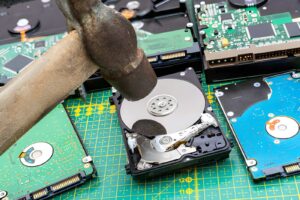
The industry also handles highly sensitive customer information. Therefore, secure data destruction should be an important part of electronic asset disposal.
Businesses should ensure that old hard drives, storage devices, and other data-bearing equipment are securely processed before recycling.
-
Automotive Industry
Modern vehicles are increasingly electronic. Cars now contain electronic control units, sensors, infotainment systems, navigation equipment, cameras, displays, battery-management systems, and numerous other electronic components.
Automotive manufacturing facilities also use robotics, automation systems, computers, and electronic testing equipment.
The growth of electric and connected vehicles is expected to further increase demand for responsible management of electronic components and batteries. Recycling these materials can support resource recovery and contribute to a more circular automotive economy.
-
Education and Research Institutions
Schools, colleges, universities, laboratories, and research organizations use large quantities of electronic equipment.
Computers, projectors, printers, laboratory instruments, networking devices, tablets, servers, and other electronics can accumulate over time.
Technology upgrades and replacement programs may create substantial volumes of obsolete equipment, particularly in large institutions.
Implementing a structured e-waste management program enables educational institutions to identify obsolete assets, segregate reusable equipment, securely handle data-bearing devices, and send non-reusable electronics to responsible recyclers.
-
Retail and E-Commerce
Retailers and e-commerce companies rely on technology throughout their operations.
Point-of-sale systems, barcode scanners, computers, electronic payment terminals, warehouse scanners, servers, routers, security cameras, displays, and other devices eventually require replacement.
Large retail chains can therefore generate significant quantities of electronic waste across multiple stores, warehouses, and offices.
Centralized collection and recycling programs can help organizations manage e-waste more efficiently while supporting their environmental and sustainability objectives.
-
Government and Public Sector
Government departments and public-sector organizations operate large technology networks. Computers, servers, printers, networking equipment, surveillance systems, communication devices, and office electronics are regularly upgraded.
Government organizations are also major bulk consumers of electronic equipment. NITI Aayog notes that manufacturing units and bulk consumers, including corporations, institutions, government agencies, and hospitals, collectively account for a substantial share of India’s e-waste generation.
Responsible disposal is especially important because government devices may contain confidential or sensitive information. Secure asset handling, data destruction, documentation, and authorized recycling should therefore be incorporated into disposal policies.
Why Industries Need Professional E-Waste Recycling
The increasing use of electronics means that e-waste management can no longer be treated as an ordinary waste-disposal activity.
Electronic devices contain both valuable recoverable resources and potentially hazardous materials. Improper dismantling, burning, dumping, or handling can create environmental and occupational risks. The Global E-Waste Monitor highlights that e-waste generation is increasing much faster than documented formal recycling.
Businesses can reduce these risks by adopting a structured e-waste management process that includes:
- Responsible collection and transportation
- Asset segregation and evaluation
- Reuse and refurbishment where practical
- Secure data destruction
- Environmentally responsible dismantling
- Material recovery and recycling
- Proper documentation and compliance support
How Escrappy Recyclers Can Help Businesses
Escrappy Recyclers supports organizations looking for a responsible approach to electronic waste management. From obsolete computers and IT equipment to telecom devices, office electronics, industrial equipment, and other electronic assets, businesses can implement organized collection and recycling programs rather than allowing unwanted electronics to accumulate or enter unsuitable disposal channels.
A professional recycling approach helps organizations move closer to a circular economy, where valuable materials are recovered and returned to productive use instead of being wasted.
For companies with regular electronic equipment upgrades, establishing a long-term e-waste management partnership can make disposal more organized, transparent, and environmentally responsible.
In Conclusion
The IT, telecommunications, consumer electronics, manufacturing, healthcare, banking, automotive, education, retail, and government sectors all depend heavily on electronic technology—and consequently contribute to the growing e-waste challenge.
As technology adoption continues to accelerate, businesses need practical and responsible solutions for obsolete electronics. Choosing professional e-waste recycling helps recover valuable resources, supports environmental protection, improves responsible asset management, and reduces the likelihood of electronics being handled through unsafe disposal practices.
Escrappy Recyclers can help businesses take a more sustainable approach to electronic waste by supporting responsible collection, processing, and recycling. Turning obsolete electronics into recoverable resources is an important step toward a cleaner and more sustainable future.